
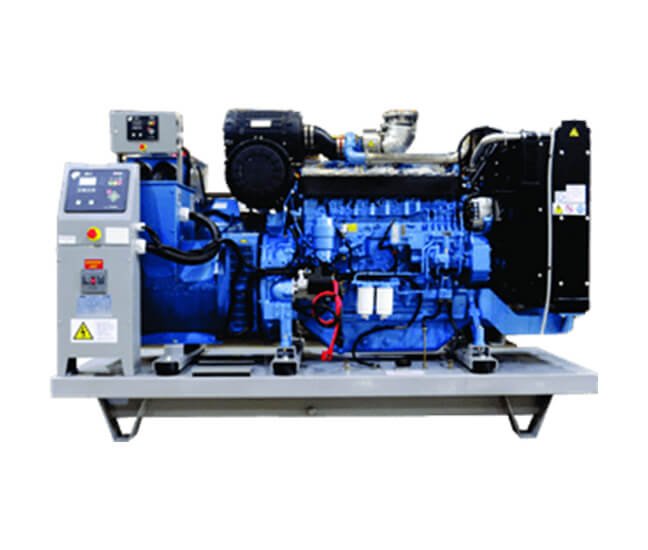
Picture a busy Lagos office on a Monday morning. NEPA takes the light, the generator kicks in, and within minutes it trips because three air conditioners and a water pump all asked for power at once. Work stops, and the business is back to waiting.
This is the most common generator problem we see in Nigeria, and it almost always starts at the buying stage with a generator of the wrong size.
The short answer: add up the running watts of everything you need to power, add the extra surge from your biggest motor, divide by 0.8 to convert to KVA, then add 20 to 25 percent headroom for growth. Round up to the next standard generator size.
This guide walks you through each step in plain language, with a worked example, a quick sizing table for homes and businesses, and the mistakes that cost Nigerian buyers the most money. Whether you are powering a three-bedroom flat in Lekki or a production line in Ikeja, you will know what size to ask for before you speak to any dealer.
KVA vs kW: What Is the Difference?
KVA measures the total power a generator can supply, while kW measures the useful power your equipment actually uses. Generators are sold in KVA, but your appliances are labelled in watts, so you need to convert between the two.
The link between them is the power factor. Most generators are rated at a power factor of 0.8, which gives this simple conversion:
So a load of 8 kW needs a generator of about 10 kVA. A 20 kVA generator delivers roughly 16 kW of usable power.
Think of it like a bottle of drink with some foam at the top. KVA is the full bottle, kW is the drink you can actually pour, and the power factor tells you how much foam to expect.
How to Calculate Your Generator Load in 5 Steps
- List everything you want to power. Walk through your home or site and write down every appliance or machine you will run during an outage. Decide what is essential and what can wait.
- Find the running watts of each item. Check the label on the back or the manual. If it shows amps and volts instead, multiply them to get watts.
- Add up the running load. Total the watts of everything that could run at the same time.
- Allow for starting surge. Motors in air conditioners, pumps, compressors and freezers draw two to three times their running power for a few seconds when they start. Add the extra surge from your largest motor to your total.
- Convert to KVA and add headroom. Divide the total by 0.8, add 20 to 25 percent for growth and ageing equipment, then round up to the next standard generator size.
Worked example: a small office in Lagos
| Equipment | Quantity | Running load (W) |
|---|---|---|
| 1.5 HP split air conditioner | 4 | 4,800 |
| Computers and monitors | 10 | 1,500 |
| LED lighting | 1 set | 600 |
| Printer, router, CCTV and phone chargers | 1 set | 500 |
| Water pump | 1 | 750 |
| Total running load | 8,150 |
One air conditioner starting adds roughly 2,400 W of surge on top of its running load. That brings the peak to about 10,550 W, or 10.6 kW.
Divide by 0.8, and the peak demand is about 13.2 KVA. Add 25 percent headroom and you get roughly 16.5 KVA, so a 20 KVA generator is the sensible choice for this office.
These figures are typical estimates. Real equipment varies, so always confirm with a site assessment before you buy.
Generator Size Guide by Use Case
Use this table as a starting point, not a final answer. Your actual size depends on the equipment you run and how much of it starts at once.
| Use case | Typical equipment | Rough size range (KVA) |
|---|---|---|
| Home, essentials only | Lights, fans, TV, fridge, a few sockets | 5 to 10 |
| Large home with air conditioning | Several split ACs, pumps, freezers, and kitchen appliances | 15 to 30 |
| Small shop or salon | Lighting, freezers, one or two ACs, dryers | 10 to 20 |
| Office (10 to 30 staff) | Computers, ACs, servers, lighting, pump | 20 to 60 |
| Restaurant or small hotel | Cold rooms, kitchen equipment, many ACs, laundry | 60 to 250 |
| Factory, farm or large site | Motors, compressors, production lines, cold storage | 250 to 3,000 |
If you fall between two sizes, go up. Running a generator at about 60 to 80 percent of its rating is healthier for the engine than running it flat out.
Prime vs Standby Power: Which Rating Do You Need?
Choose a prime-rated generator if it will run for many hours every day, and a standby-rated one only if it will cover occasional outages.
Manufacturers publish two ratings for the same machine:
- Standby rating: the maximum output for emergency use during short outages. It is higher on paper but not meant for long daily running.
- Prime rating: the output the generator can supply continuously with a variable load. This is the safer number to size against.
In many parts of Nigeria, the grid is unreliable enough that a generator effectively becomes your main source of power. If that describes your site, size against the prime rating and ask the dealer to confirm it in writing.
Single-phase or three-phase?
Homes and small shops usually run on single-phase supply. Larger offices, hotels, factories and anything with heavy motors normally need three-phase. A three-phase generator also lets you spread the load evenly across phases, which protects the alternator and improves performance. Check your building's supply before you order.
Matching Your Size to the Right Generator Brand
Once you know your KVA, the next question is which brand suits your site, budget and working conditions. At Intricate Power and Services, we supply three trusted options:
- FG Wilson Perkins: a premium diesel choice known for engineering excellence, advanced control systems and scalable capacity. A strong fit for hotels, hospitals, banks and operations that cannot afford downtime.
- YORC Generators: a balance of performance, fuel efficiency and affordability, built to cope with tough environments and low-grade fuel. Available from 15 KVA to 3,000 KVA, so it covers everything from larger homes to industrial sites.
- Lister Petter: rugged, long-lasting diesel generators from a brand with more than 150 years of engine-making heritage. Well suited to agriculture, manufacturing and hospitality.
Not sure which to pick? Share your load list with our team, and we will recommend a size and brand that fits your budget and your site.
6 Generator Sizing Mistakes to Avoid
- Ignoring starting surge. Running watts alone will not tell you whether the generator can start your ACs and pumps.
- Buying by price per KVA. A cheaper generator that is too small will trip, overheat and wear out faster, which costs far more in the long run.
- Oversizing "just in case". A diesel engine that runs at very light load for long periods can suffer from carbon build-up and poor fuel economy.
- Forgetting future growth. If you plan to add machines, staff or air conditioners in the next two or three years, size for them now.
- Skipping the site assessment. Ventilation, exhaust routing, noise limits, fuel storage and the changeover panel all affect which generator is right for you.
- Neglecting maintenance. Even a perfectly sized generator fails early without regular servicing. A maintenance service plan keeps oil, filters and fuel systems in good order and helps you catch problems before they cause downtime.
Frequently Asked Questions
What size generator do I need for a 3-bedroom house in Nigeria?
For essentials only (lights, fans, TV, fridge), a 5 to 10 KVA generator is usually enough. If you want to run several air conditioners, a water pump and kitchen appliances together, expect to need 15 to 30 KVA. Add up your actual load to be sure.
Can a 10 KVA generator run an air conditioner?
Yes, in most cases it can run one or two 1.5 HP air conditioners alongside basic household items. The limit is starting to surge, so avoid switching on several ACs at the same moment.
What is the difference between KVA and kW?
KVA is the total power a generator can supply, and kW is the usable power after the power factor is applied. At a typical power factor of 0.8, kW equals KVA multiplied by 0.8.
Is it better to buy a bigger generator than I need?
A little headroom is wise, but a generator that is much too large wastes fuel and can develop problems from running at very light load. Aim for a running load of roughly 60 to 80 percent of the generator's rating.
Should I choose prime or standby power?
Choose prime-rated if the generator will run daily for long hours. Choose standby only if it will cover occasional outages and run for short periods.
How often should a diesel generator be serviced?
Follow the manufacturer's service schedule. Oil and filter changes are commonly due every few hundred running hours or every six months, whichever comes first. A service plan takes the guesswork out of it.
Get the Right Generator Size the First Time
Choosing the right generator size comes down to knowing your real load, allowing for starting surge, and leaving sensible headroom. Get those three things right and you will avoid tripped breakers, wasted fuel and expensive early repairs.
If you would rather not do the maths alone, the engineers at Intricate Power and Services Limited can assess your site, calculate your load and recommend the right FG Wilson Perkins, YORC or Lister Petter generator for your budget.
Request a free load assessment or quote today:
- Phone: (+234) 8060035062
- Email: info@intricatepowerandservices.com
- Hours: Monday to Friday, 8am to 6pm (Lagos)
- Online: contact our team
Already own a generator? Ask about our Maintenance Service Plans to keep it running reliably.

0 Comments